You’ve decided this is the year you’re going to do it. Whatever “it” is. The business idea you’ve been turning over for months, maybe years. You’ve done the maths, sort of. You’ve got a list of things to spend money on that’s quietly terrifying. The brand sits somewhere on that list, between the website and the accountant and the hundred other things you need to sort by Friday.
Then someone mentions AI.
A logo for the cost of a coffee. A whole brand kit by the weekend. Colours, fonts, a Canva template, maybe even a website built by something with a clever name and a free trial. The shiny appeal is real. We get it. If we were starting a business tomorrow and we hadn’t spent the last twenty years staring at the inside of this industry, we’d probably be tempted too.
What follows is, as plainly as we can put it, why we think that shortcut quietly costs most small businesses more than it saves. Not because we’re a design studio trying to scare you off AI. We use these tools ourselves, every week, and we’ll talk about that in a minute. The reason we’re writing this is that we’ve watched too many businesses make this exact decision, and we’ve seen what happens next.
Eighteen months ago, we started taking AI seriously as part of our studio toolkit. We tested it. We poked at it. We’ve built things with it for our own businesses, and we’ve watched clients arrive at our door with the results of theirs. So this isn’t a defensive rant from people who haven’t tried. It’s a status report from people who actually have.
Here’s the honest version.
Where AI is actually a sensible choice
We’re not anti-AI. Anyone in a creative business who is, by now, isn’t paying attention. The tools are here, they’re getting better, and a lot of them are useful for the right job.
So let’s start with what AI is fine for.
If you need a quick social post for a one-off campaign, AI is fine. If you’re putting together an internal slide deck that nobody outside the business will ever see, AI is fine. If you need a fun visual for a Christmas post that’ll be forgotten by January, AI is fine. The pattern is simple. Low audience, low lifespan, low consequence. The thing you’re making isn’t carrying the weight of your business on its back.
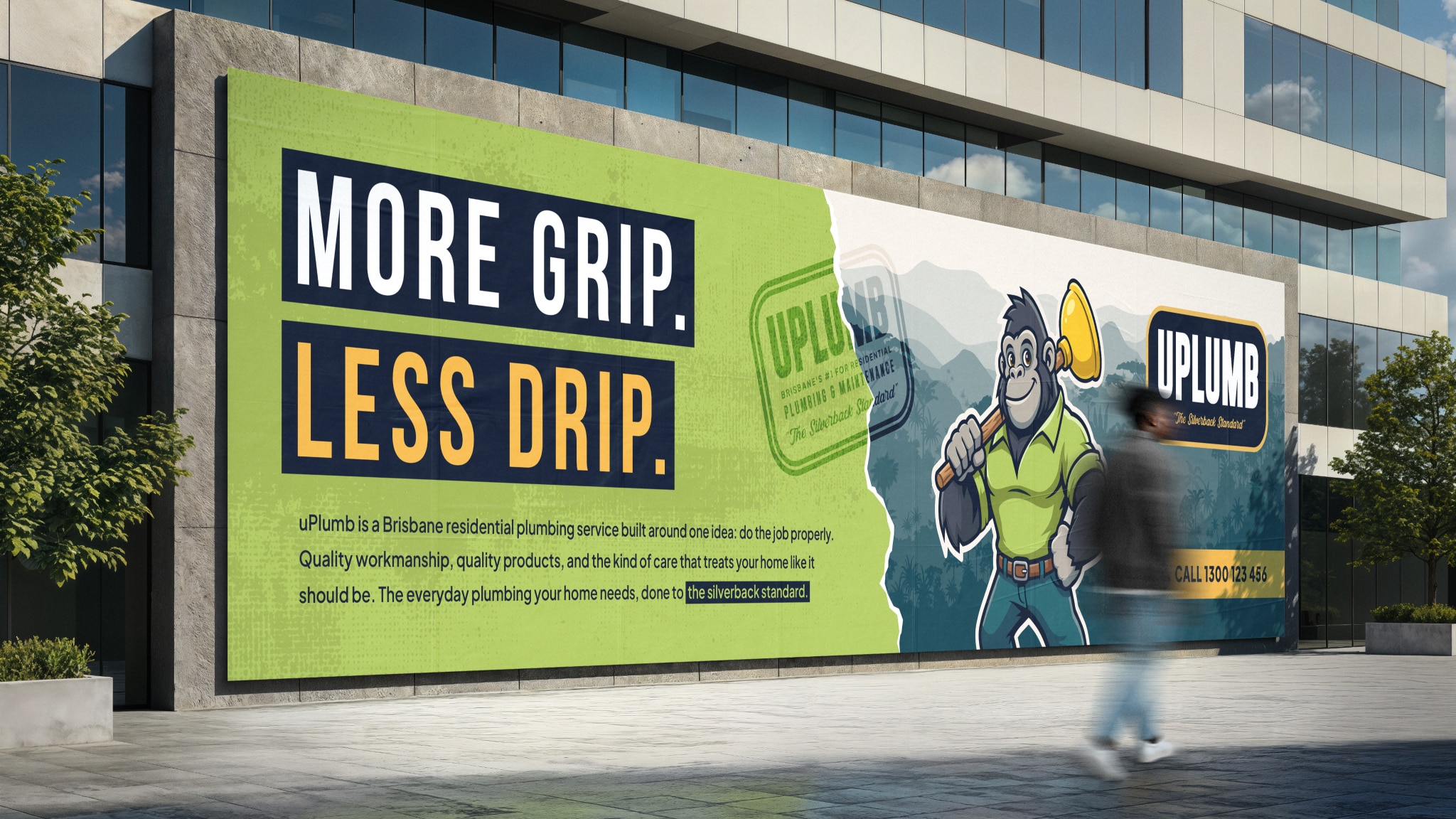
We use AI like this ourselves. The clearest example is mascot work. When we’ve designed a brand mascot for a client and they need that character in twelve different poses for a campaign, AI can speed up what would otherwise be hours of hand-drawing. We feed in the existing character, prompt for the poses we want, and we get there faster.
Here’s the part nobody tells you, though. Even with us doing it, the result usually lands at about 75 to 80 percent of where it needs to be. We then bring it into our design software, tidy it, fix the bits that look slightly off, redraw the awkward hand, fix the proportions, and vector it properly so it’s actually usable across whatever the client needs. The AI got us close. The professional craft got us finished.
That gap, between “AI got us close” and “this is actually usable”, is the part nobody talks about. It’s where most of the problem lives.
So yes, AI has a place. The question isn’t whether to use it. The question is for which jobs.
Why AI struggles with the brand itself
Right. Let’s talk about why “I’ll just use AI to build my brand” rarely delivers what people hoped for.
There are four things that go wrong. Sometimes one of them, sometimes all four at once.
The cliché problem
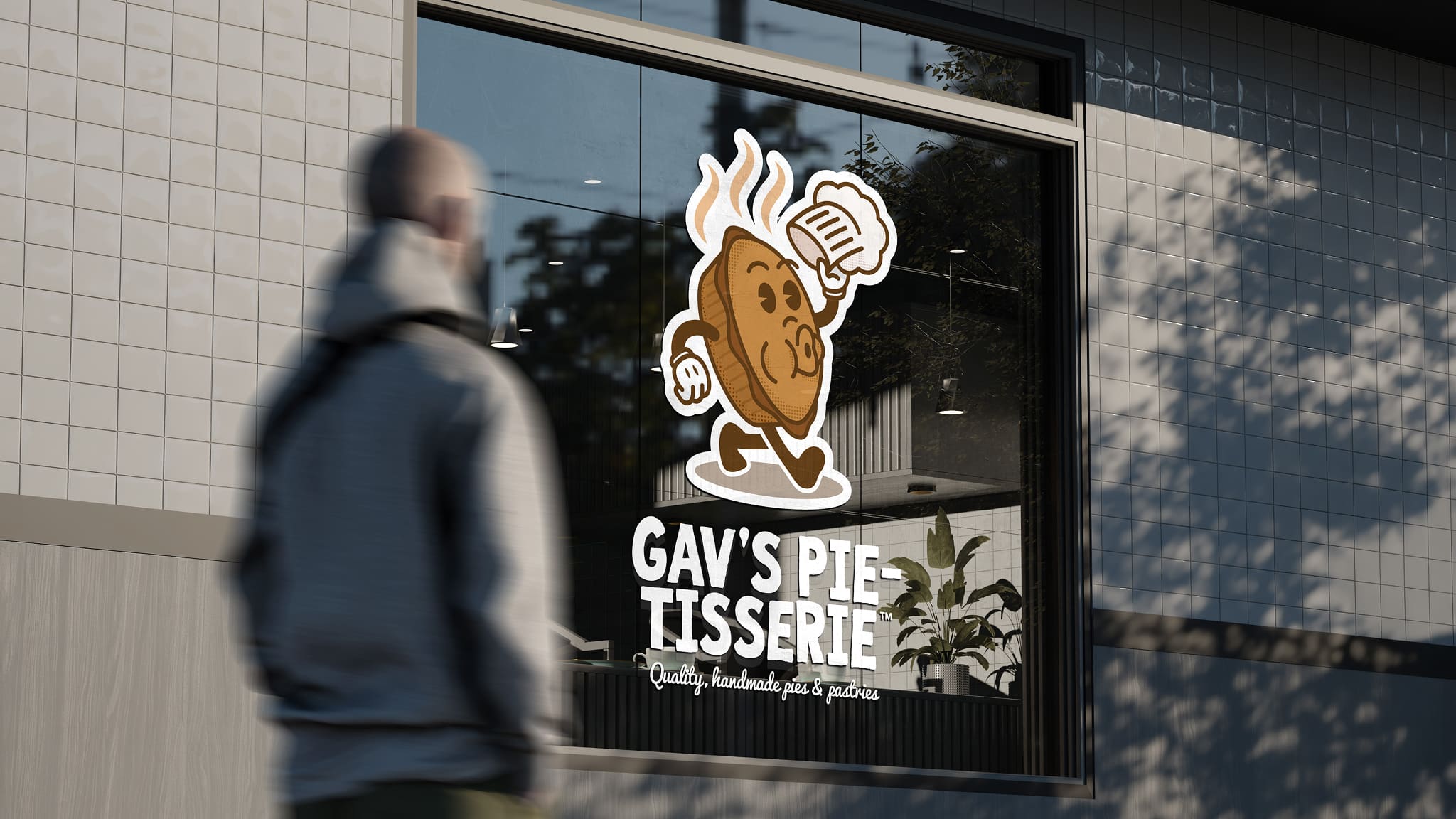
AI is trained on patterns. Ask it for a logo for a coffee shop and it gives you something with a coffee bean. Mechanic? Wrench. Landscape gardener? A tree. Bakery? A bread loaf or a chef’s hat. It can’t help it. That’s literally how the tool works. It takes the obvious associations and stitches them together.
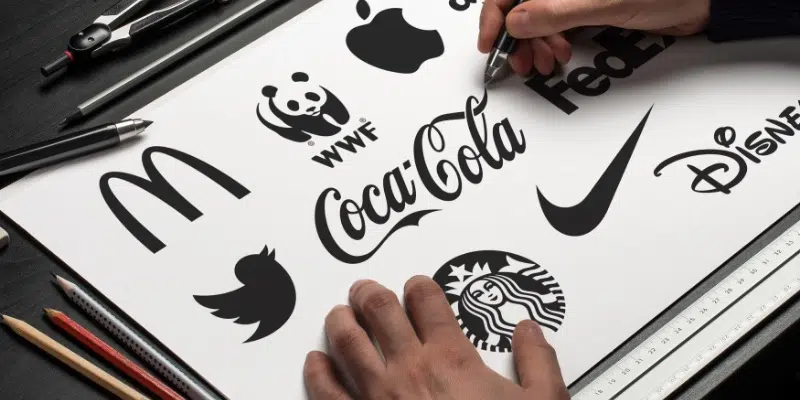
This sounds like a small problem. It isn’t. A logo really shouldn’t show what the business does. It’s there to identify the business. Apple doesn’t have a computer in its logo. Starbucks doesn’t have a coffee cup. Nike doesn’t have a shoe. They have marks that mean something specific to their brand, and that you’d recognise from across a room with no other context.
AI tends to deliver the opposite. A generic visual shorthand for your category that makes you look exactly like everyone else in it. If your goal is for customers to pick you out of a sea of similar businesses, AI hands you the version that blends right in.
The format problem
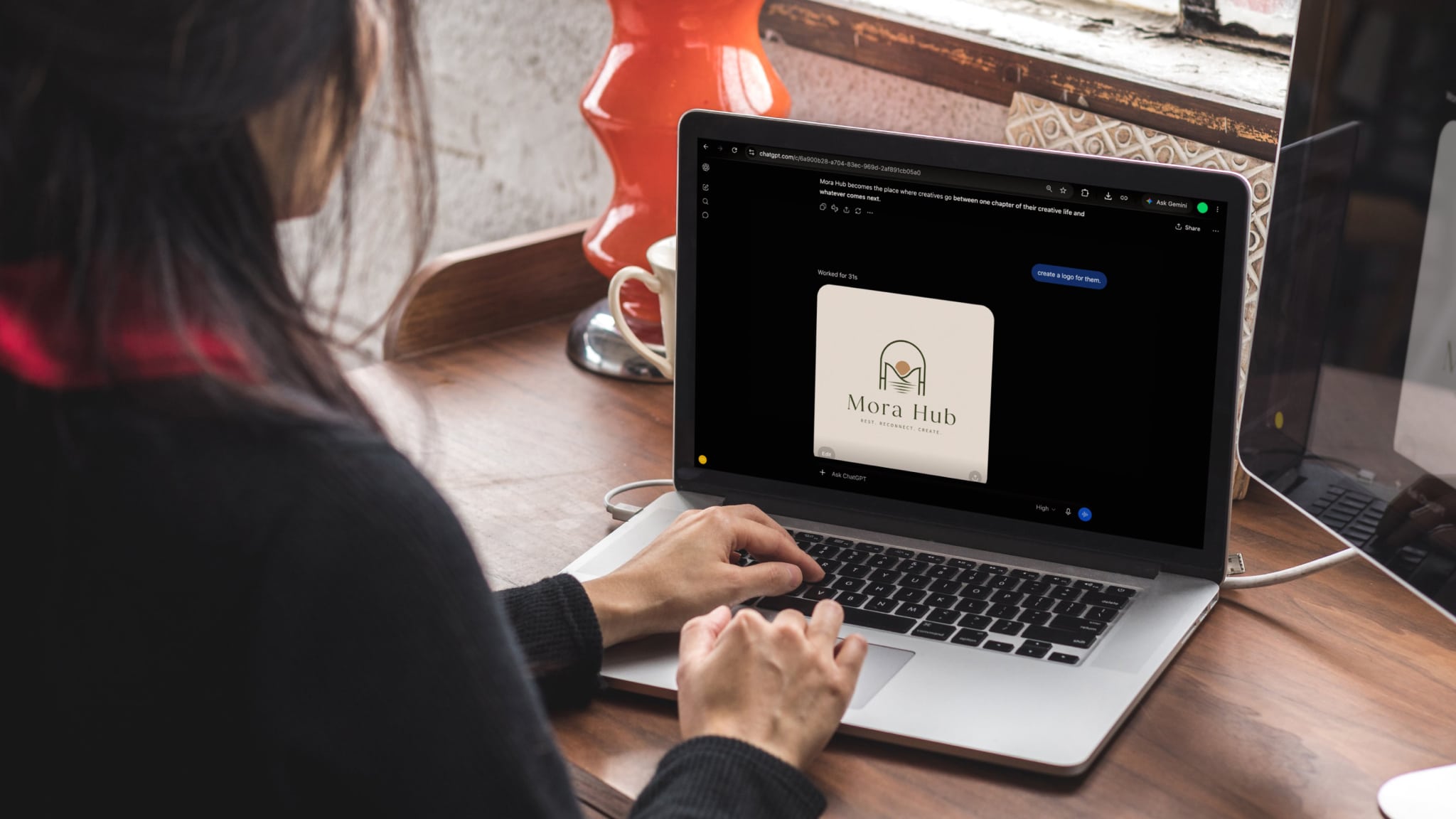
This one’s painful for us, because we see it weekly. A client arrives at the studio with a logo they generated, asking us to “tidy it up” or “vector it”. What they have is a JPEG. One pixel-based file, one size, one colour version, no transparency, no scalable version, no fallback for small sizes, no horizontal layout, no symbol-only mark for the social profile picture.
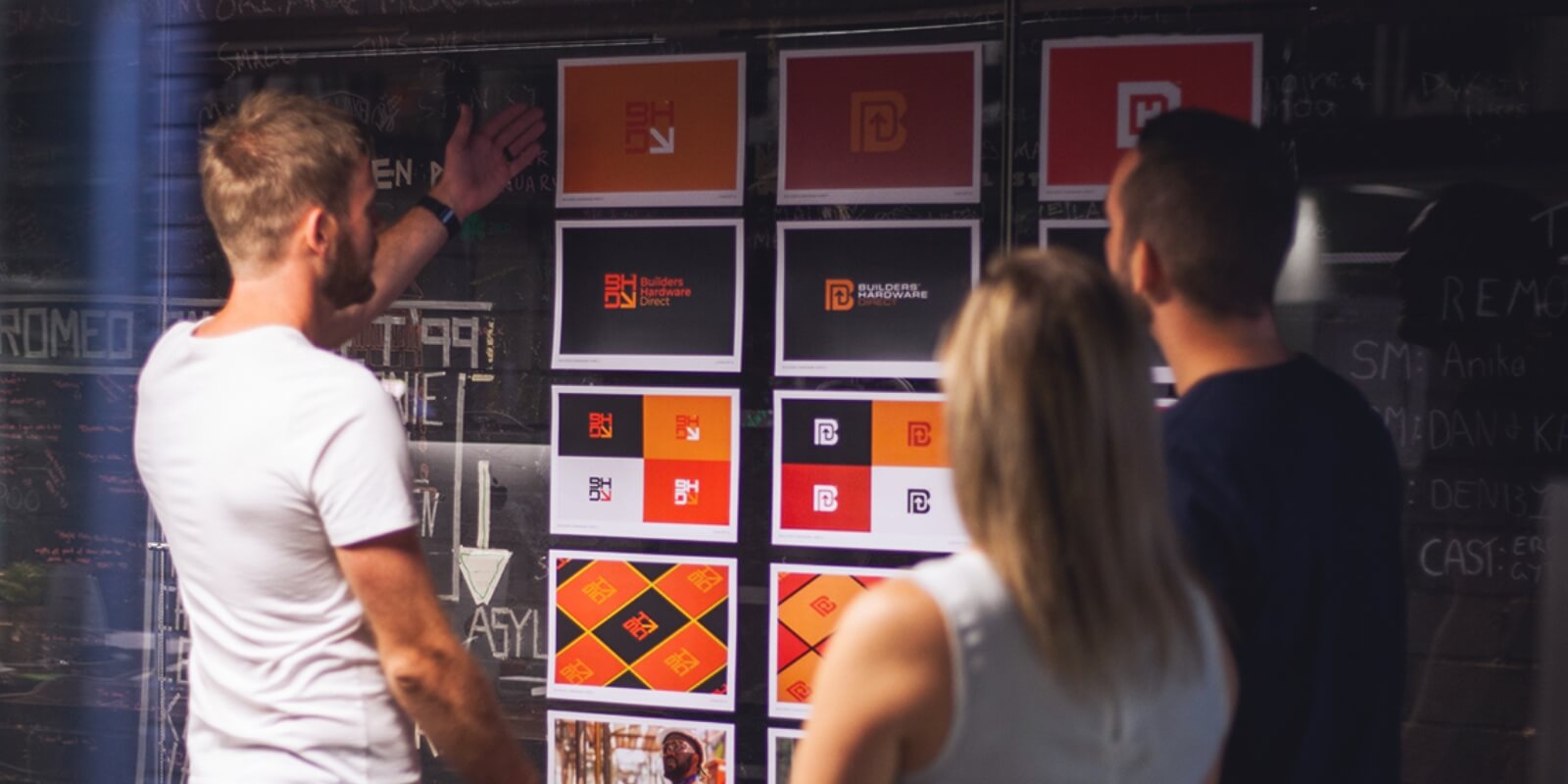
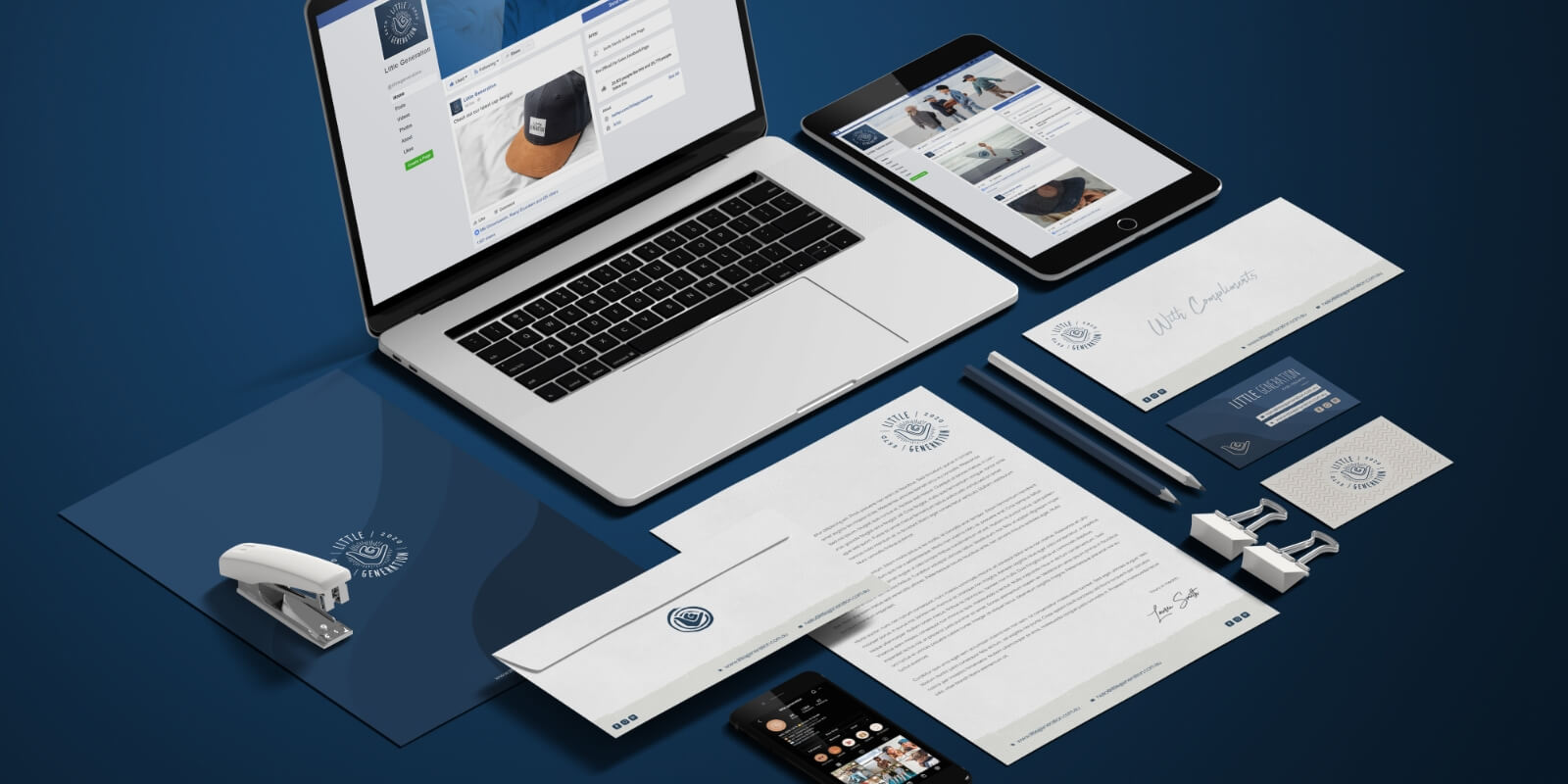
A real brand doesn’t have one logo. It has a system. A primary version, a secondary, a symbol on its own, a horizontal lock-up for narrow spaces, light versions for dark backgrounds, dark versions for light backgrounds, vector files that scale from a billboard to a business card without falling apart. AI tools, by and large, give you one image. That’s not a logo. That’s a picture of a logo.
The cohesion problem
Let’s say you do manage to wrangle a half-decent logo from one tool. Tomorrow you’ll need a social tile. The day after that, a one-pager. Next week, business cards. Each time you sit down to make something, you’re starting from scratch with whichever AI tool is open. The fonts drift. The colours drift. The mood drifts. By month three you’ve got a folder full of work that vaguely resembles itself but doesn’t lock together.
Brand is consistency. Consistency over time, across touchpoints, across people who never speak to each other. The thing that makes a brand feel like a brand is the repetition. AI is brilliant at making one-off outputs. It’s terrible at making forty outputs that feel like they came from the same place.
The audience misalignment problem
This is the deepest one, and the one most people don’t spot until it’s too late. To get something good out of an AI tool, you have to know what good looks like before you start. You have to know what your audience responds to, what your competitors are already doing, what visual territory is open, what tone is right for the people you’re trying to reach. You have to feed it the right references.
There’s a phrase we keep coming back to in the studio. What you feed in is what you get out.
If you don’t know the answers to those questions in the first place, the AI can’t help you find them. It’ll amplify whatever you put in, which means it’ll amplify your gut feeling about what looks “nice”. And your gut feeling about your own business is almost always the wrong place to start.
Why this is harder than it looks (even when you do it for a living)
I’ll tell you a story against myself here.
I run a few businesses, not just the studio. There’s an e-commerce business in there, and a couple of other ventures I’ve been involved in over the years. So as well as designing for clients, I’ve been on the other side. Starting something from nothing, with a budget, with a to-do list, and with my own brand to build.
Designing for your own business is one of the hardest design jobs going. You’re too close to it. You like things because you like them, not because they’ll work. You agonise over decisions a fresh pair of eyes would settle in five minutes. You can’t tell what a stranger sees when they land on your website, because you can’t unknow what you already know about your own business.
We say this to clients all the time. When we present work, we ask them not to think “do I like this?” but “will this work for the people I’m trying to reach?”. Even after twenty years of doing this, we still don’t trust one person’s opinion in the studio. We check things with each other. We check with the client. We test against the audience we’re aiming at. Anyone who tells you they get it right on instinct every time is lying to you, or to themselves.
Why does this matter? We’ve been actively testing AI tools for the last 18 months. We use them for our own studio, for the e-commerce business, for client work where appropriate. And only now, after a year and a half of practice, are we starting to get outputs we’d consider properly usable. Even then, only with iteration, and only because we have the design knowledge to know what to ask for, what to reject, what to fix, and what to throw away.
If trained designers need 18 months of practice to get usable results, what’s the realistic expectation for a non-designer who sits down on a Tuesday evening trying to build a brand for the business they’re launching on Monday? We can spot AI work a mile off. So can your customers, especially the ones who matter.

Taste, and the questions AI can’t ask
There’s a word that comes up in our studio more than any other when we talk about why design works. Taste.
Taste isn’t whether you personally like a colour. Taste is the accumulated ability to tell, in advance, whether something will land. Whether a typeface choice will read as confident or apologetic. Whether a layout will feel premium or cluttered. Whether the way a logo sits on a coffee cup will look considered or accidental. It takes years to develop, and you mostly develop it by getting it wrong, looking at the wrong version next to the right version, and learning the difference.
Design is functional. Taste is knowing what looks good, but also what will work, and balancing those two things at the same time.
A lot of what a brand studio actually sells, when you boil it down, is the conversation that happens before the design starts. We’re not just delivering a logo. We’re sitting down to understand the business from the inside out. What does this company actually do that’s different? Who’s the customer, properly, not the version on the about page? What are your competitors already saying, so we know what territory’s still free? What’s the personality of the business, not what you wish it was, but what it actually is? What’s the tone of voice that’ll make someone want to talk to you?
You can ask AI those questions. It’ll cheerfully give you answers. The problem is the answers will be averages, because that’s what AI does. It’ll tell you what most coffee shops sound like, what most law firms look like, what most landscapers value. Average is the enemy of brand. Brand is what you do differently.
If you don’t already know what makes your business different, you can’t prompt AI to find it for you. And if you guess, AI will dutifully build around your guess, and you’ll end up with something that looks fine in isolation but doesn’t earn its keep when it has to compete in the real world.
This is why we never work in a silo, even with 20 years of experience. We test our own work against each other. Against the client. Against the audience we’re aiming at. We don’t trust our own taste in isolation. The thing AI can’t do, and the thing most one-person AI brand-building exercises skip entirely, is that act of stress-testing the decision against the people it’s actually for.
You can’t get to “this is the right answer” without the questions that come before it. And AI doesn’t know to ask them.
The first impression you don’t get back
This is the part of the article we’d most like a small business owner thinking about cutting corners on branding to read carefully.
Roughly half of small businesses don’t survive five years. That’s not a scare statistic, it’s what the data says. The figures are pretty consistent year on year, and the pattern looks much the same across most developed economies. About one in five businesses fails in year one. Roughly half are gone by year five. The two leading causes are cash-flow problems and “no market need”, which is shorthand for nobody understood what you sold, or didn’t want it once they did.
Both of those failure modes are partly a branding problem. If people don’t understand what you do in the three seconds they spend looking at your homepage, you’ve got a brand problem. If they understand but don’t feel like you’re a credible option, you’ve got a brand problem. If they feel like you’re a credible option but you blur into the seven other options they considered, you’ve got a brand problem.
Customers decide about a new business in seconds. That’s not us being dramatic, that’s how attention works in 2026. You either earn their next click or you lose them, and the people you lose almost never come back to give you a second look once you’ve grown up enough to afford “proper branding later”.
That’s the fallacy we want to push back on. “I’ll cut corners now and do branding properly when the business grows” sounds reasonable in the moment. The problem is, the corner you’re cutting is the corner that determines whether the business grows in the first place. It’s putting the cart before the horse. You’re saving money on the very thing that’s there to win you customers, by guaranteeing it doesn’t.
Look, we’re aware we’re saying this from inside a branding studio. We’re biased. We’ll cop to that. But the reason we hold this view isn’t that we want to sell more work, it’s that we’ve watched the pattern play out for two decades. The businesses that put their best foot forward earlier tend to get a chance. The ones that hamstrung themselves with a brand that looked like everyone else’s often don’t.
A small note here, because we feel strongly about it. If the issue is that proper branding feels out of reach because of upfront cost, that’s actually a solvable problem. We offer flexible payment plans on most of our work for exactly this reason. We’d much rather make it possible for a new business to start strong and pay over time than watch them spend three years quietly struggling because the brand wasn’t pulling its weight.
Where AI actually belongs in the process
We’ve spent most of this article being honest about what AI can’t do. To be fair, here’s what it can do beautifully, once the foundations exist.
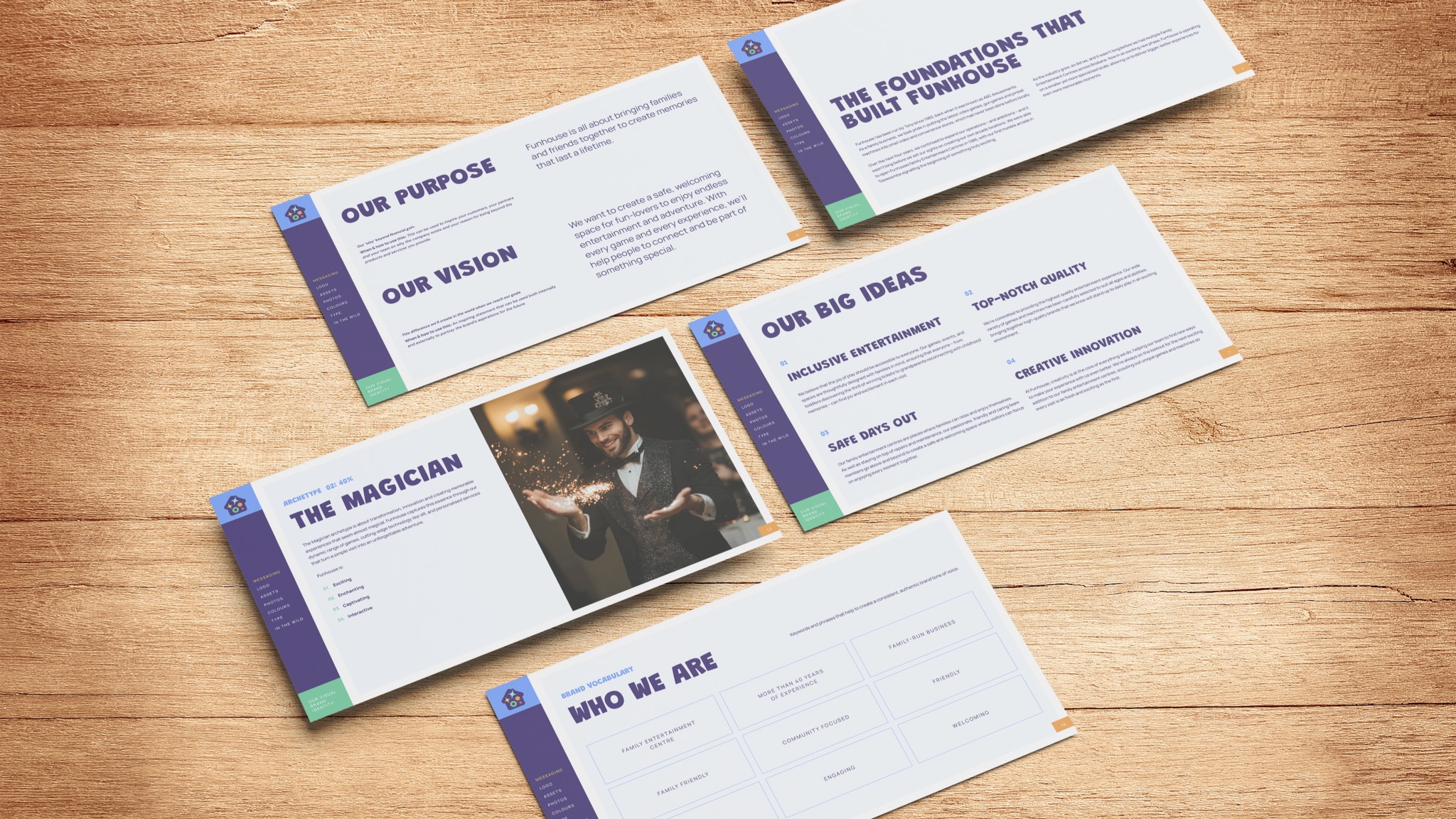
When a brand has been properly thought through, when there’s a logo system that flexes, a typography pairing that works, a colour palette that lives across light and dark mode, a tone of voice you can read back to yourself, and a set of brand guidelines that explain how it all hangs together, AI suddenly becomes very useful.
Because now it has guardrails.
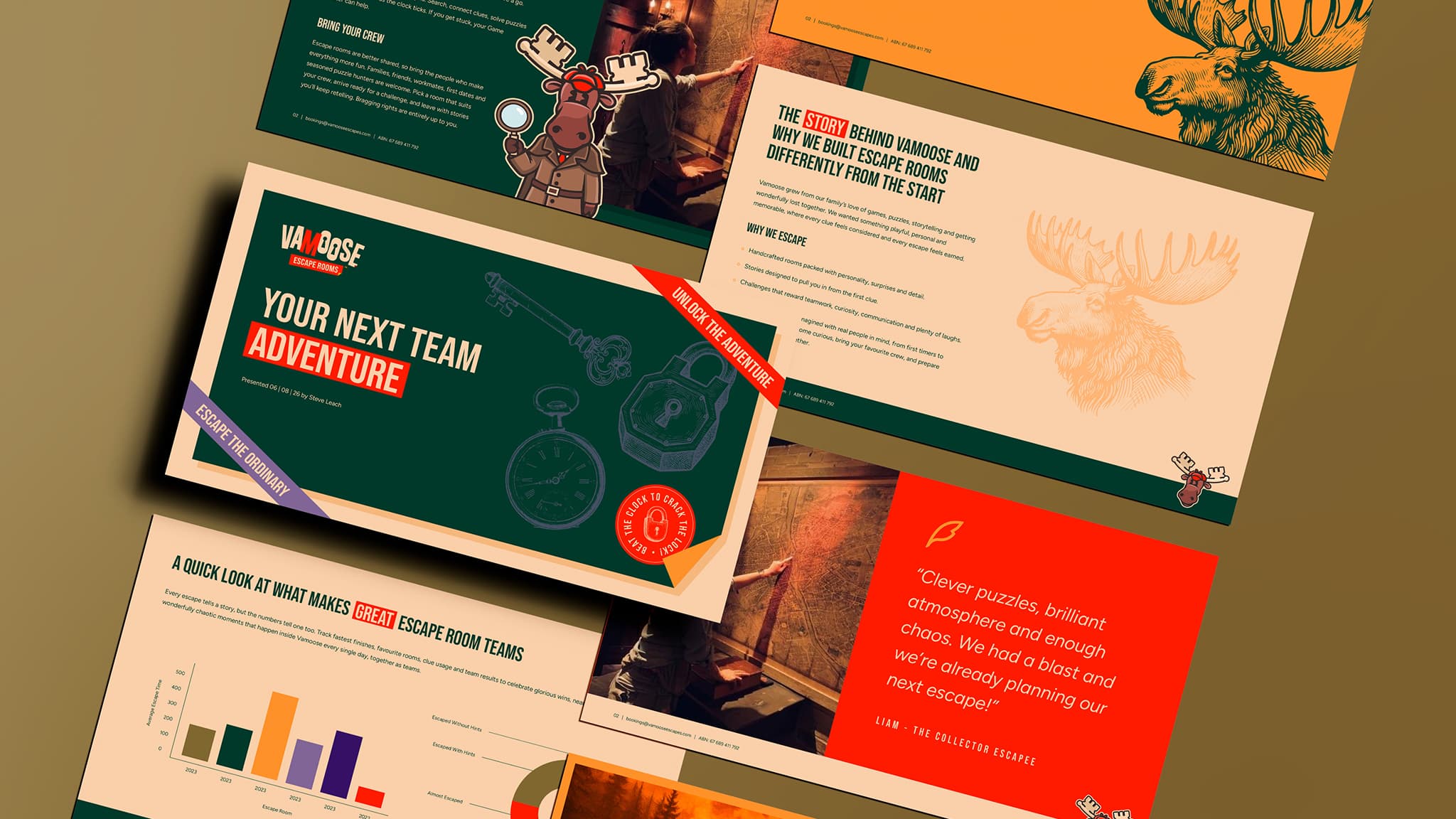
Feed AI tools your brand kit and they can help you roll out. PowerPoint templates that look properly on-brand. Landing pages for a single campaign you’re running this month. Social posts that feel consistent because you’ve given them the right ingredients. The brand has been decided. AI is executing within decisions someone already made well.
This is the model we’d like to see more small businesses use. Get the foundations done properly, once, by people whose job it is to make those decisions. Then use AI to extend that foundation across the hundred small jobs that come up over the next two years. That’s a sensible use of both. Humans for the judgement, AI for the rollout.
There’s a future version of this where the tools genuinely can build a brand top to bottom. We don’t think we’re there yet. We don’t think we’re close. But even when we get there, knowing what brand to build will still need a person who understands the business, the market, the audience, and the bit of taste that takes years to earn. The tools change. The judgement doesn’t.
Don’t cut the corner that compounds
Most small business owners we meet are trying to be careful with money for good reason. We respect that completely. The question isn’t whether to spend less. It’s where to spend less.
Use AI for the jobs it’s actually good at. The low-stakes, the one-off, the rollout work where the decisions have already been made. Be cleverly cheap there. Save money where it doesn’t cost you a customer.
Use a designer (or, ahem, us) for the part that compounds. The brand decisions you’ll be living with for a decade. The first impression you only get to make once. The system that lets the whole business punch above its weight from day one.
The choice isn’t expensive versus cheap. It’s investing in the bit that earns its keep, and being smart about the rest.
If you’re at the start of a business and the cost of doing this properly feels out of reach, talk to us anyway. We’ve got payment plans, we’ve got options, and we’d much rather help you start strong than watch you cut the wrong corner.